Our Current Priorities
Peel Bright Minds – STEM Beyond Schools Program
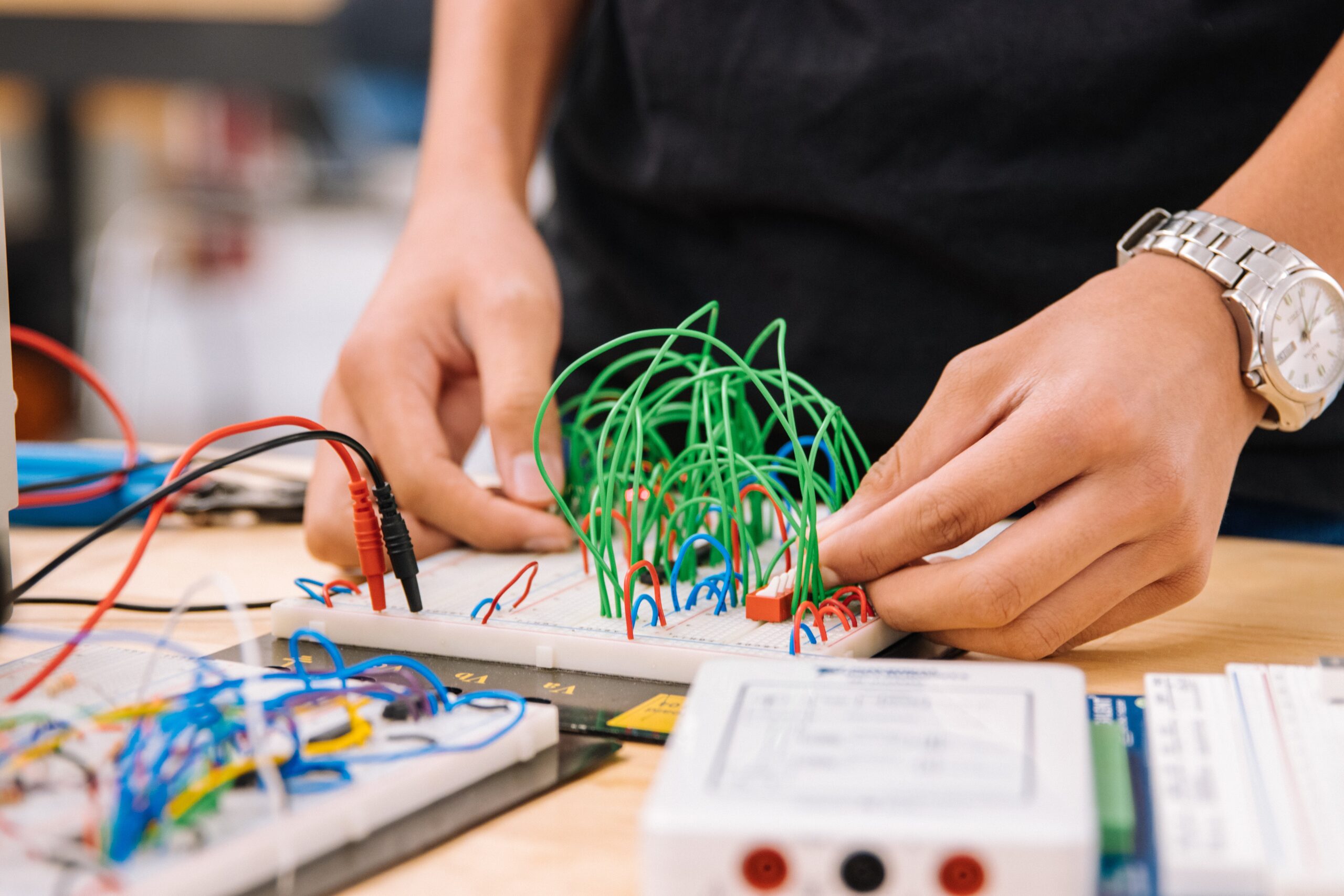
If Australia is to thrive in the future of work, the responsibility for training cannot rest solely with the education sector. Ultimately, everyone in Australia needs to embrace the required skill shift as a collective effort. A community-wide approach to transferring knowledge will be fundamental for developing skills that will ensure success in the era of artificial intelligence.
Education is everyone’s business
At a regional level bringing the importance of STEM skills to the forefront through the delivery of initiatives that engage young people in STEM, through the coordination and influence of key stakeholders to embrace STEM, and by promoting STEM career pathways to the broader community.
Australia faces challenges in maintaining its labour productivity rate by improving the skills of workers, supporting participation in work, investing in infrastructure and taking full advantage of digital technologies to boost productivity (The Treasury, Intergenerational Report 2021).
Embracing innovation, technology and science is critical to powering our economy to provide jobs and high living standards for all Australians (DISER, The National Innovation and Science Agenda, 2015).
Peel’s skill shortage is a major barrier to the region realising its aspirations to be a prosperous region. Currently Peel’s largest industries by output include Manufacturing, Mining, Construction and Health Care and Social Assistance, all industries needing a pipeline of STEM qualified professionals to increase output and productivity.
Since its launch in February 2018, Peel Bright Minds has provided the means for people of all ages from all backgrounds to be engaged with and learn about the importance of STEM skills as the basis for the future of work.
Highly regarded and recognised in the Peel region, Peel Bright Minds has matured to the stage where it needs to expand its current, and deliver new offerings that will directly contribute to:
• Improved educational outcomes
• Increased retention of young people in the region
• Increased participation of young people in STEM careers
• Increased participation of young people in tertiary study
• Increased participation of local people in local industries
The objectives of STEM Beyond Schools are:
OBJECTIVE ONE: DELIVER STEM RELATED INITIATIVES THAT DIRECTLY ENHANCE THE CAPABILITY OF THE PEEL WORKFORCE
• Connect young people to STEM learning opportunities through the delivery of the Junior Trail
Blazers and Trail Blazers Programs.
• Increasing access and diversity of STEM opportunities through community events and workshops.
• Development of Industry Specific Trail Blazers Programs relevant to local future career
opportunities (e.g. Future Foods, Cybersecurity, Environment, Health & Community Services, Mining
Industry, Defence Industries)
OBJECTIVE TWO: INFLUENCE REGIONAL STAKEHOLDERS TO ENHANCE STEM OPPORTUNITIES IN THE PEEL
• Developing partnerships and strengthening existing networks to enable new home-grown STEM
opportunities in the Peel.
• Developing and attracting flexible extra-curricula STEM education opportunities into the Peel.
• Including the STEM agenda within regional strategic planning.
OBJECTIVE THREE: PROMOTE STEM PATHWAYS AND OPPORTUNITIES TO FOSTER A MORE ASPIRANT CULTURE IN THE PEEL
• Communicating the value of STEM to the community broadly through podcasts and other digital
media.
• Promoting opportunities for engagement in citizen science & STEM learning experiences.
• Measuring outcomes through a longitudinal study of participants.
RDA Peel is requesting Government investment of $1 million over 4 years to support the Peel Bright Minds Program to deliver regional community led responses to address gaps in maintaining engagement of STEM students beyond the school environment.
This investment will enable implementation of the STEM Beyond Schools Program which includes:
– 2 x Trail Blazers 6 month programs for up to 36 participants (13-17 years old), including examination of the feasibility of industry-specific Trail Blazers Programs across locally relevant industries (e.g. Mining, Services, Defence, Agriculture & Food Production, Environment, Health Services).
– 2 x Junior Trail Blazers one-day events for 10-13 year olds.
– Re-introduction of the Innovation in Action Program
– Development of the STEM Ambassadors Program
– Continuation of the Curious Conversations podcast series
– Ongoing recognition of Peel STEM Achievers.
– Reintroduction of the highly successful Science Café series.
– Further development of the Peel Bright Minds volunteers’ program.
– Development of an outreach program to local schools.
– Continue the Longitudinal study of all participants to gather valuable data on the pathways taken by participants to achieve their ambitions and how these choices were informed.
Addressing sustainability issues in te Social Services Sector
RDA has been supporting the Peel Community Development Group (PCDG) over a number of years in identifying the current and future needs of the sector to meet a growing demand for services addressing increasingly complex issues.
PCDG is the peak body representing the Peel Region’s not for profit community service organisations, its role being to strengthen and support community services in the Peel Region through leadership and advocacy.
In October 2022, supported by other regional stakeholders including RDA, PCDG launched the Peel Away the Mask III (PATM III) report. This report, building on the Peel Away the Mask (PATM) reports published in 2001 and 2012 (also supported by RDA), sought to understand how the challenges and opportunities facing the Region’s communities have evolved as well as the context in which health and community service providers are operating.
PATM’s data and research provides the health and community sector and stakeholders with a valuable resource to advocate for services and infrastructure that will have the strongest impact for the residents of the Region.
Accompanying the main PATM III Report is the PATM III Action Plan and the People of Peel Dashboard – two important new elements of the PATM III project. The Action Plan draws on consultation with health and community service providers across the Region and consolidates the key recommendations of PATM III into priority initiatives and projects that PCDG and partners can advocate for.
The People of Peel Dashboard provides a valuable online resource that is available online, providing access to interactive and up to date social and economic data about the Region and its people, including Local Government Area specific data (where available).
The PATM III Action Plan was developed in consultation with health and community service providers and stakeholders across the entire Region. It identifies Local Government Area (LGA) specific action areas and projects that align with the greatest areas of need and opportunity, to make lives better for the communities who live there.
The Peel Away the Mask III Priority Projects Report utilised insights from the Peel Away the Mask III Action Planning Forum to prioritise actions identified in the Peel Away the Mask III Action Plan. The following priority projects were identified:
- Expanding volunteer services
- Supporting new parents to navigate childhood development
- Delivering men’s behaviour change program
- Life skills for primary schoolers
- Expanded temporary accommodation
To enable the community sector to develop these projects further RDA commissioned the Peel Away the Mask III Final Priority Project Profiles and Costings Report. The purpose of this work was not to provide a business case or feasibility study for each program/service/infrastructure, but to develop a high level understanding of the operational and financial requirements of each so that early advocacy could begin. It is envisaged that each of these programs will require further profiling and investigation as they develop into funding proposals, and that this process will be led by PCDG and their partners in the health and community services sector.
In April 2024, in response to concerns from communities and stakeholders regarding the effectiveness and sustainability of the community and Social Services sector, RDA commissioned the Peel Community and Community Health Services Industry Mapping Project Report. The objectives of this project were to identify current and emerging gaps in community and community health service delivery across the region and to support the community and community health sectors advocate more effectively for the funding they need to provide effective services to their clients.
The key findings of this report focused on 5 areas of the Social Services sector operating across the Peel region:
- Family, Domestic Violence and Sexual Services
- Housing and Homelessness
- Mental Health
- Families and parenting
- Youth services
The findings are:
- These 5 area of the Social Services sector are currently experiencing a shortfall of $12.475 million in 2023-24.
- By 2031 these 5 areas of the Social Services Sector are collectively facing a
This shortfall if funding has led to, inter alia:
- Increased difficulty for organisations to retain suitably qualified and experienced staff;
- A reduction in the range of services able to be offered to clients;
- A reduced geographic scope of services being offered across the region.
Due to non-availability of publicly available data, detailed analysis on current and future funding requirements could not be fully completed for other areas of the sector.
RDAs support has led to PCDG now being able to advocate to State and Federal Governments to respond to the requests:
- Governments provide an additional $120 million over 6 years from 2025-26 to ensure the ongoing sustainability of 5 areas of the Social Services Sector in the Peel region:
- Family, Domestic Violence & Sexual Services
- Housing and Homelessness
- Mental Health
- Families and Parenting
- Youth Services
- Governments improve the transparency of current processes to ensure the region’s stakeholders and communities have ready access to the detail and performance of their investments in Social Services delivery.
RDA has also provided support to PCDG by way development of an advocacy strategy, including identification of targets and development of assets to support their requests.
Peel Water Supply Initiative
 RDA Peel is supporting the Peel Alliance to ensure the planned and sustainable provision of water to the Peel region considering the impact of climate change, a rapidly growing population, and opportunities for agriculture and industry, whilst protecting our environment and precious waterways.
Peel Alliance comprises the five Peel Region councils of Mandurah, Murray, Serpentine Jarrahdale, Waroona and Boddington, together with Regional Development Australia Peel, the Peel-Harvey Catchment Council and the Peel Community Development Group. The Peel Development Commission supports Peel Alliance and its strategic priorities plan.
The main roles of Peel Alliance are to
- advocate for priority initiatives and projects
- advocate for the resolution of regional issues; and
- support other initiatives and projects that benefit the region.
Mining and agriculture is dependent on the provision of large quantities of water, particularly groundwater which is now at full or over-allocation in most areas.
Declining rainfall and groundwater levels has resulted in decreased flows from the catchment to the Peel-Harvey Estuary, and despite intervention in the form of the ‘Dawesville Cut’ in 1994 to address its deteriorating health, is declining again. The reductions are also affecting groundwater-related ecosystems such as wetlands and lakes within the Peel-Yalgorup Ramsar System.
Peel Alliance has engaged consultants to analyse and articulate the region’s water demand and supply challenges now and into the future. Using a horizon of 2050, and analysing information provided by stakeholders, the Peel Regional Water Supply Initiative will provide spatial and temporal reporting on the timing and magnitude of needs to 2050 for:
- Urban growth including household needs (potable water and sewerage) and community space/infrastructure
- Agricultural sustainability and opportunities
- General and strategic industry needs including mining
- Environmental water, recognising that sufficient site-specific ecological information is not currently available and that some assumptions will be necessary.
- Water source options available and order of magnitude costs for planning, construction and operation.
The study indicates that, even under a ‘waterwise’ or highly conservative demand projection, the region’s needs will exceed the currently available sources of water within the next few years.
It is also critical to note that the water resources required to sustain the significant water-dependent environmental assets of the Peel Region will change in the future, largely in response to climate change (rainfall and evapotranspiration). This study has shown that the potential overall reduction in stream flows to the Peel Harvey Estuary by 2050 (~260GL) is significantly larger than the current level of surface water and groundwater abstraction combined (~120GL). This means that in a future climate, current freshwater flows into the Peel-Harvey system could not be maintained, even if all abstraction were to cease. This is likely to have significant implications for the health of the estuary and wetlands.
The Peel Alliance is seeking support and funding for state-led business cases that identify strategic solutions for long-term security of water supply to the Peel region (National Water Grid Fund).